Learn About Kōkako
North Island kōkako (Callaeas wilsoni) are one of New Zealand’s lesser-known but fascinating native birds, and feature on our New Zealand $50 bank note.
Once common in most North Island forests, from sea level to about 1200m, they now live and thrive only in healthy forests that receive good pest animal management. Kōkako populations are recovering in some forests, thanks to decades of proactive conservation efforts, notably by community groups like the Kaharoa Kōkako Trust.
Recognised by their haunting song, distinctive blue wattles, and black ‘Zoro mask’, kōkako play an important role in Aotearoa New Zealand's native forests. Their large territories (approximately 8ha in Kaharoa) and varied diet, which includes many forest fruit types, means they make a valuable and diverse contribution to forest seed dispersal, and thereby, forest health. Efforts that increase kōkako numbers will also benefit their forest habitat at the same time.
-
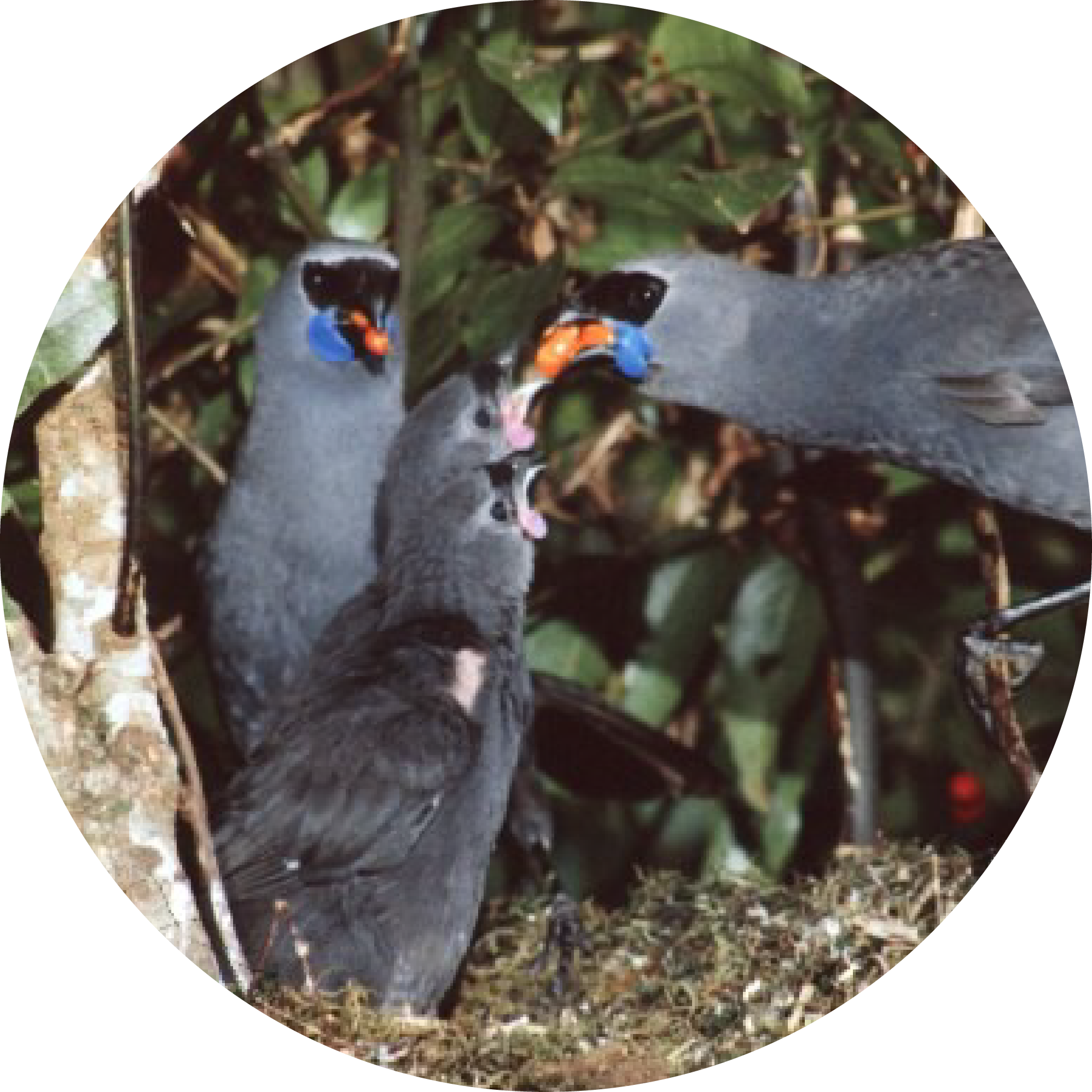
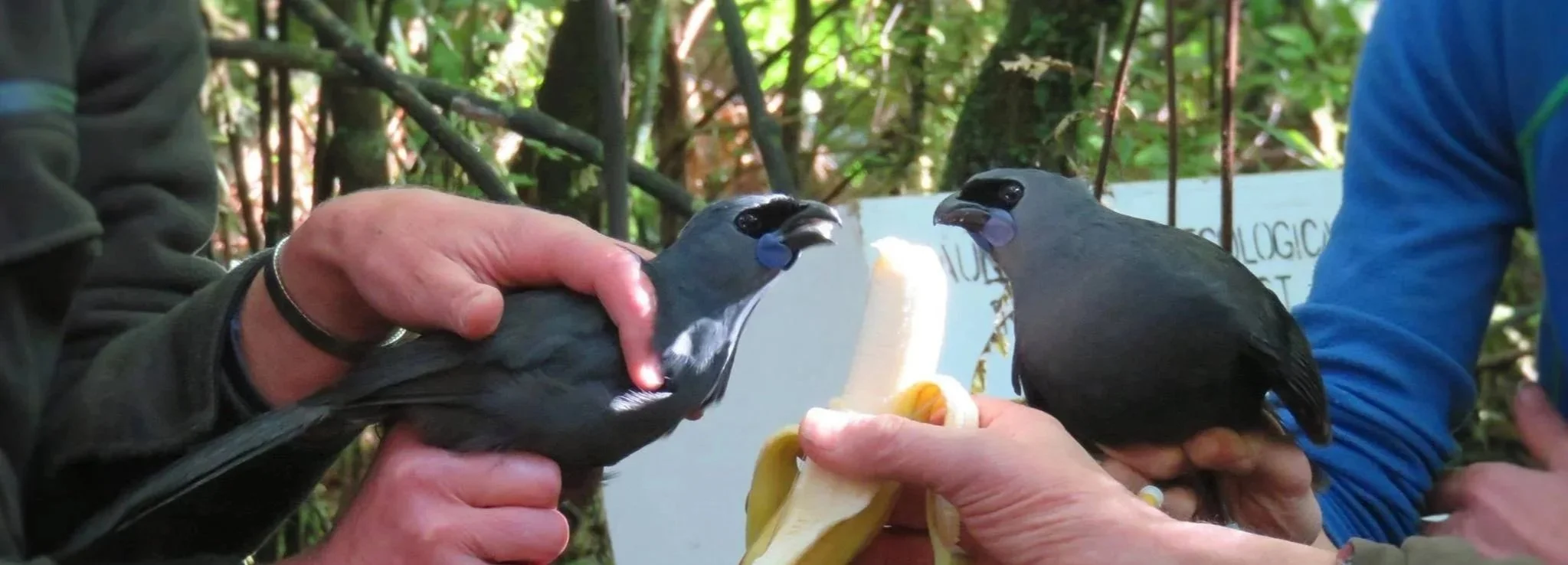
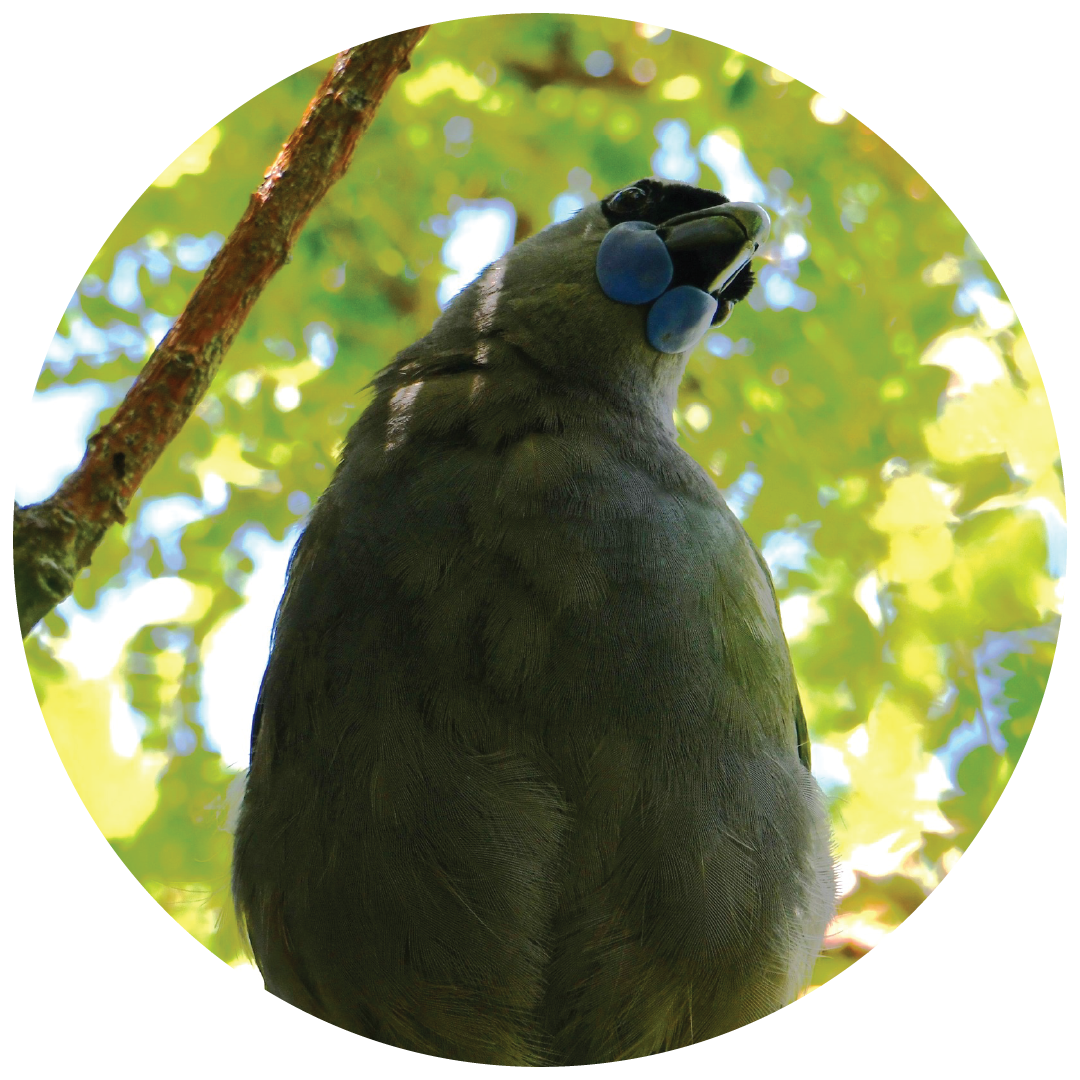
Kōkako are easily recognised by their distinctive appearance. They have a striking black facial mask, blue-grey plumage, and bright blue fleshy wattles at the base of their bill. Juvenile kōkako have pink or lilac wattles that gradually turn blue as they reach maturity (by about 1 year of age).
As medium-sized songbirds, adult kokako are about 38cm in length and weigh approximately 218g (females) / 233g (males).
Their distinctive, diverse, melodious calls can be described as haunting, or organ-like, and in still morning air can be heard from hundreds of metres away. Different populations of kōkako have their own unique song dialects, but they make many other sounds as well, including tooks, mews, buzzes, clicks, snaps, and loud wing flaps. To hear kōkako, try visiting Kaharoa, or other kōkako managed forests early in the morning - or listen to the archive of recordings on this page from NZ Birds Online.
Kōkako have long, strong legs for running, leaping, and bounding through the forest at all levels, even on the ground, if there are no predators. They have short, rounded wings and a long, fan-shaped, down-curved tail, which are great features for gliding between trees and forest ridges, but not so good for distance flying.
This is partly why kōkako have become isolated in fragments of forest – they cannot fly more than about 50m, so with habitat loss when forests were cut down, kōkako became trapped in isolated forest areas and without good pest management soon died out. -
Kōkako are primarily frugivores, feeding on forest fruit and leaves all year round, as well as flowers, buds, nectar, and invertebrates when available. Invertebrates and fruit are very important food for kōkako chicks.
As kōkako forage for food throughout a forest’s canopy, sub-canopy, shrub layers and vines, they help maintain the forest's biodiversity by spreading seeds from the fruit they have eaten.
-
The breeding season for kōkako typically runs from October to March. The female will build a bulky, twiggy nest in trees, anywhere from 2 to 25 meters off the ground. These cup-shaped nests are made from twigs, leaves, ferns, small vines and other vegetation. Sometimes they build their nests in epiphyte clumps.
Female kōkako lay 2 – 3 eggs per clutch, which she then incubates for around 18 days. After eggs hatch, the female broods her chicks to keep them warm, and the chicks remain at the nest for around 32 days, with both parents feeding and caring for them. The fledglings stay with their parents for several months before becoming independent.
-
Despite their beauty and vital role in the forest, kōkako face numerous threats, primarily due to habitat loss, predation by introduced species such as rats, stoats, and possums, and competition for food. Predators not only eat kōkako eggs and chicks but also the adult females on their nest (females can be at their nest for over 50 days, making them very vulnerable to predation).
Introduced predators and introduced browsing mammals such as deer, goats, wallabies and pigs also compete with kōkako for food and can severely reduce the diversity of food species in a forest. To combat these threats, conservation groups have worked tirelessly to control predator populations and restore habitats over the last three decades.
As a result of active pest predator and pest browsing management, along with translocation efforts and other initiatives, kōkako populations have been making a remarkable recovery. In 1999, there were only around 330 breeding pairs left. Today, thanks to these conservation efforts, there are over 2,000 pairs throughout the North Island and some offshore islands.
Learn More

For more in-depth information about kōkako, check out these sources:
NZ Birds Online - this detailed database of NZ’s birds includes many more details about the breeding and ecology of kōkako, other projects helping to protect them, population trends, recordings of their song, photos and more.
Department of Conservation - DOC’s website shares details about conservation initiatives in place to help recover the population of North Island kōkako.
For more information about kōkako in Kaharoa forest, what we’re doing to help them, and the other species our efforts protect, check out these pages on our website:
How You Can Help
You can play a role in protecting kōkako by supporting community conservation groups like the Kaharoa Kōkako Trust. There are a number of ways that you can get involved, whether that’s by volunteering, donating, or simply spreading awareness of the work being done to save this precious species.