
Our Story
Kaharoa Kōkako Trust (KKT) was formed in 1997 by a group of passionate locals determined to save the local remnant kōkako population living in the Kaharoa forest.
In the 8 years leading up to our inception, a study undertaken by the Department of Conservation and Landcare Research/New Zealand Forest Research Institute showed for the first time that introduced mammals (rats, possums, etc.) were causing kōkako numbers to decline.
“Kaharoa finished that programme with no pest control. The last four years with no pest control but monitoring, was hard to do. During the pest control years, the kōkako population in Kaharoa increased, and successful chicks being fledged was up to 80%. But with no pest control, that just plummeted. In the last two years, no kōkako pairs produced any chicks successfully.”
Carmel Richardson, trustee of KKT
To reverse the trend, the community stepped up, and Kaharoa Kōkako Trust was formed. Our work started with a network of 160 bait stations throughout 360 hectares of Kaharoa forest and has expanded from there.
With a shared vision and a deep love for nature, we have worked to secure funding, to advocate for, and to carry out conservation work, as the caretakers of this forested land.
Today, the team continues to work together to protect and restore the kōkako habitat, and our efforts have much improved the forest ecosystem and led to an increase in the kōkako population.
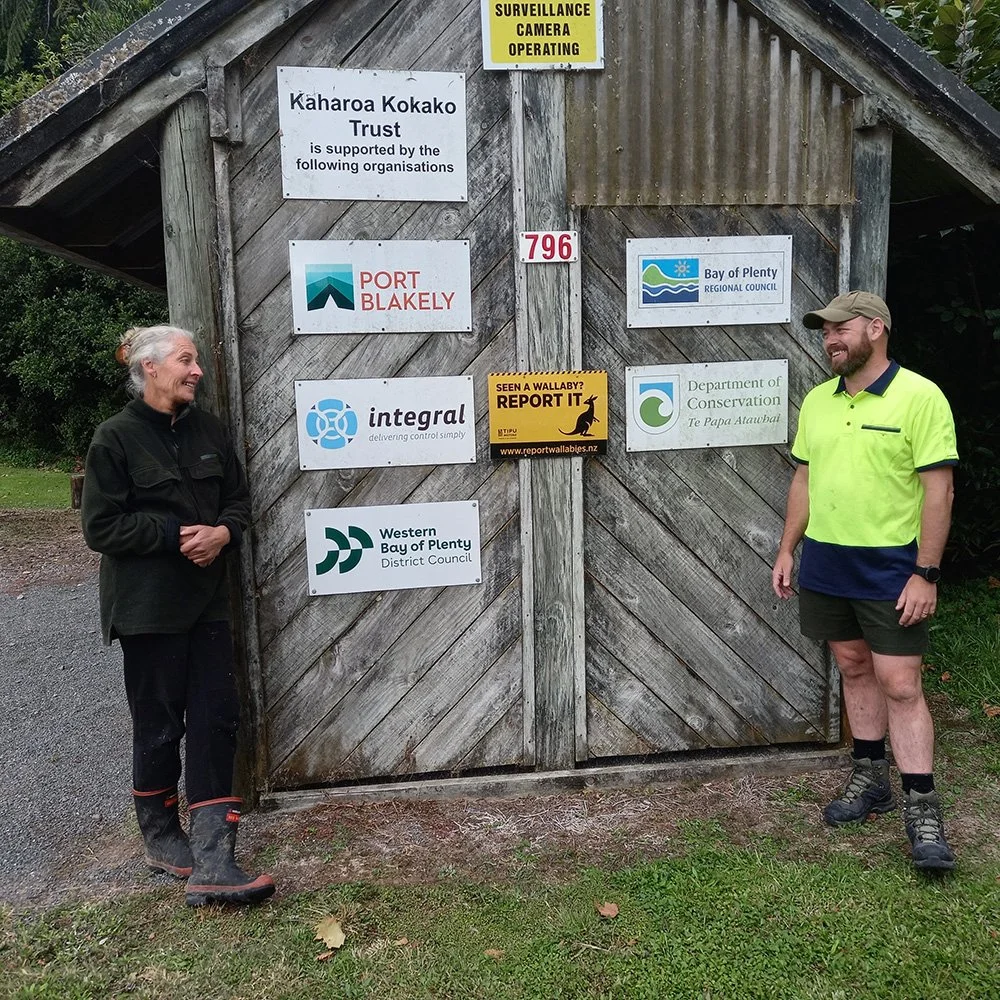
Our Journey
1997 - Volunteer work began in Kaharoa forest with 160 bait stations deployed over 360 hectares.
1998 - Kaharoa Kōkako Trust was formally incorporated in January 1998 through a Memorandum of Understanding with the Department of Conservation.
1998 - Winner of the Trustpower Spirit of Rotorua Heritage & Environment Award.
2005 - The Department of Conservation (Bay of Plenty) awarded KKT with an ‘Outstanding Contribution to Conservation’ accolade.
2006 - Overall winner of Environment Bay of Plenty Conservation Award.
2006 - The Rotorua District Council Community Award was granted to our founders, Peter Davey & Rachael Dixon-Davey.
2007 - The Rotorua District Council Community Award was granted to Anne Managh.
2008 - The North Island Kōkako Recovery Group acknowledged the KKT’s significant contribution to the Kōkako Recovery Programme.
Partnerships for Success
We are actively involved with a number of collective conservation organisations to achieve broader results for the biodiversity we serve through active membership in:
Kōkako Recovery Group
The Kōkako Recovery Group is a subgroup of the Department of Conservation made up of DOC staff, scientists, kōkako practitioners, and dedicated volunteers representing community groups across the North Island, who have extensive experience in kōkako conservation.
KRG provides expertise, specific advice and general guidance to community groups, as well as overseeing research priorities, translocations, and coordinating annual hui to collate results and encourage networking.
Through this initiative, we work together to support the restoration of kōkako populations by implementing best practices, preserving kōkako genetics through activities such as translocations to founder new populations in appropriate protected forest environments.
Bay Conservation Alliance
Otherwise known as BCA, the Bay Conservation Alliance is a collective organisation that supports conservation projects throughout the Bay of Plenty by building stronger capabilities and bringing individual efforts together to achieve greater outcomes.
BCA helps in many ways, including:
Administrative and advisory support.
Training and education.
Fundraising and applying for grants.
Advocacy within government.
Supporting groups to access contractors.
Bringing individual conservation projects together to develop deeper relationships and achieve broader outcomes.
Kōkako Ecosystem Expansion Programme (KEEP)
Current science indicates that kōkako need at least 2000 hectares of healthy forested habitat to ensure a resilient and genetically viable population of at least 250 breeding pairs. However, many of the remaining kōkako habitats around the Bay of Plenty are much smaller. For example, the Kaharoa Conservation Area is approximately … hectares, and Ōtanewainuku has around 1,200 hectares under management.
However, if we connect these areas of forest remnant together through corridors, we can have enough habitat to ensure a resilient long-term population while enabling genetic flow between different groups of kōkako.
KEEP is an intergenerational programme designed to do exactly this. It is a collaboration between many different groups (farmers, Iwi, community groups, forestry, council, DoC, etc.) that we are proud to be involved with.
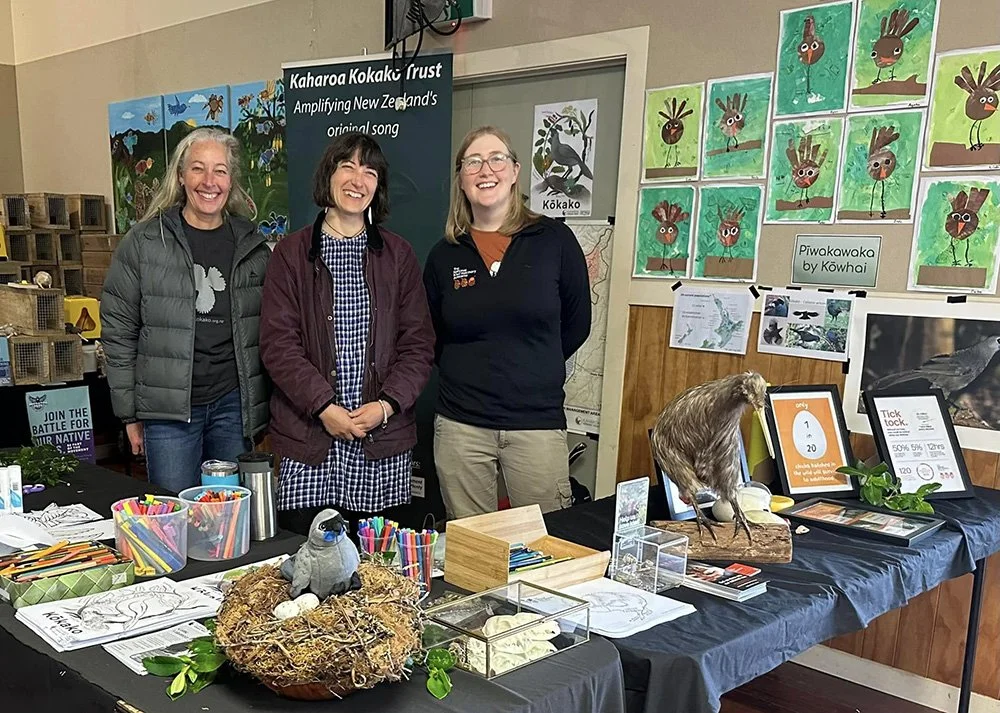
Empowered by Community
We are deeply grateful for the support, collaboration, and partnerships that have enabled KKT to function effectively over the years. This includes generous donations of time and resources from our trustees, volunteers, and supporters - both past and present.