
Kōkako at Kaharoa
In 1997, only 30 to 40 kōkako remained in Kaharoa forest. Thanks to decades of conservation efforts, that number had increased to 124 adult kōkako by 2022. However, this is a decline from the 173 kōkako counted in 2015, which raised concerns about the challenges still facing the population.
Our community of volunteers have worked hard to reverse this trend and ensure that kōkako thrive once again in the Kaharoa Conservation Area – 950 ha of which around 800 ha is suitable kōkako habitat. We are doing this through proactive predator control measures (trapping, toxins, and monitoring), and habitat improvement and expansion. Community involvement is key to everything we do.
A full census of the Kaharoa kōkako population was carried out in September 2025, with a total of 170 territorial kōkako located, comprising 81 pairs of kōkako holding territories and 8 single kōkako holding territories.
This is a significant increase from the last census in 2022 when a total of 124 territorial kōkako were found, comprising 57 pairs and 10 single kōkako.
Of note during the 2025 census was the number of young kōkako encountered. Young kōkako are non-territorial, so are not counted, but were found following pairs around, hanging out in gangs of up to 6 birds, and generally larking about. They are the equivalent of teenagers hanging out with similar aged mates, 'checking out' their forest together, looking for potential future territory sites, meeting neighbours, and practicing their vocals.
Young but independent kōkako are an indication of successful breeding the previous season due to good pest animal control (especially of rats, possums and stoats).
The 2025 kōkako census was carried out by a team of experienced surveyors over two weeks, in the Kaharoa Conservation Area, a total of 970ha. kōkako were also heard singing in forest on privately owned land outside the surveyed area.
Unique Genetics
The kōkako in Kaharoa are a remnant population with unique and valuable genetics. Protecting these birds is not just about increasing numbers; it’s also about preserving their genetic diversity, which is vital for the species' long-term survival.
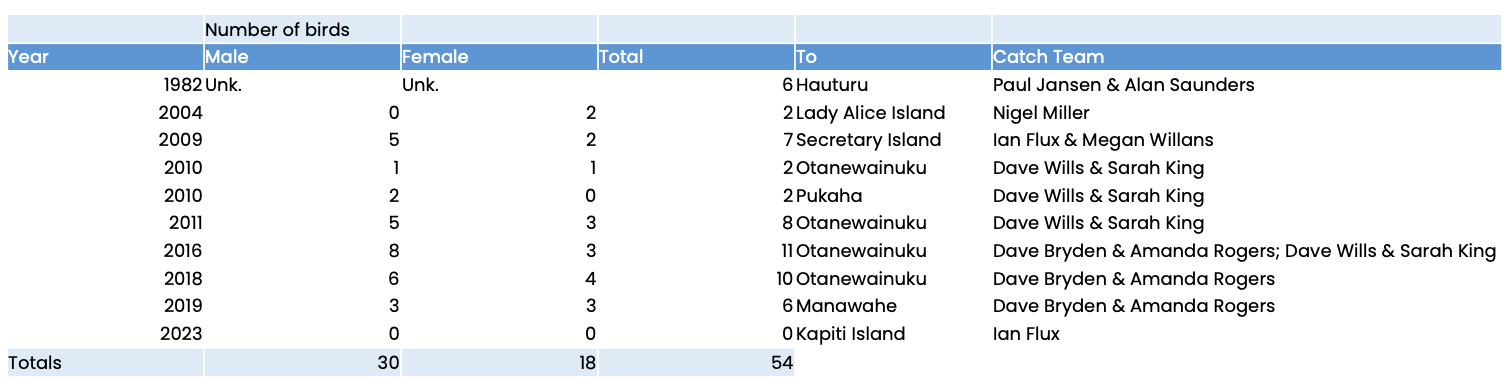
By maintaining a healthy population in Kaharoa, we can help strengthen kōkako populations both here and in other locations. Kōkako from Kaharoa have been translocated to other forests in the past, including the Bay of Plenty locations of Ōtanewainuku and Manawahe, to support the recovery of kōkako populations in these areas.
Translocations help to increase the resilience of kōkako by ensuring genetic diversity across different habitats. This work is part of our broader commitment to the kōkako’s survival beyond Kaharoa.
| Year | Number of birds | To | Catch Team | ||
|---|---|---|---|---|---|
| Male | Female | Total | |||
Joining Forces for Kōkako

Alongside the immense community volunteer support that enables us to help kōkako, we are also involved with a range of wider-reaching conservation organisations and Hapū that ensure our efforts are aligned and effective.
We work closely with organisations like:
Kōkako Ecosystem Expansion Programme (KEEP)
KEEP is an intergenerational project initiated by KKT to enable the Kaharoa kōkako population to expand to 250 pairs of adult birds. This will be achieved by working to create forest corridors that connect other protected forest remnants, and ultimately by linking remnant kōkako populations in areas throughout the Bay of Plenty, like Ōtanewainuku and Kaharoa.
Bay Conservation Alliance (BCA)
BCA supports conservation projects across the Bay of Plenty by providing training, education, administrative support and fundraising assistance. They also help build strong relationships between conservation groups to achieve greater collective outcomes.
Department of Conservation (DOC)
As KKT is working on public conservation land, we work closely with DOC to ensure that we comply with legal requirements, that we apply best practice techniques for our work, and so that our predator control and habitat management actions align with national kōkako recovery strategies. DOC provides permits, resources, advice and support in our ongoing conservation efforts.
Kōkako Recovery Group
This group is made up of kōkako researchers, DOC staff, and experienced volunteers. They work throughout the North Island to protect and restore kōkako populations and help coordinate national kōkako conservation efforts, including translocation projects and best practice guidance.
Local Hapū (Tapuika and Ngāti Rangiwewehi)
Our relationship with local Hapū is fundamental to our work in the Kaharoa forest. They contribute valuable knowledge of the land and history, play an active role in assisting, guiding and supporting our conservation activities.
Get Involved
Our kōkako conservation activities are driven by volunteers, and we’re always looking for more hands to help out. Whether you’re 8 or 80, there’s a role for you.
Volunteers contribute in many ways, from managing trap lines and attending work days to applying for funding, supporting marketing initiatives, and helping with education and outreach. Every bit of support counts and brings us closer to our goal of a healthy, thriving ecosystem and an increasing kōkako population.